The worst thing about a tragedy – dashed hopes and disappointments – is that life goes on for the heart sick.
After burying your beloved in the ground, little children still wake up the next day before the break of dawn to badger you for breakfast and bills need to be paid. While the bereaved is absorbed in devastation and the memory of what is lost, they remain in a world of ordinary task and responsibility.
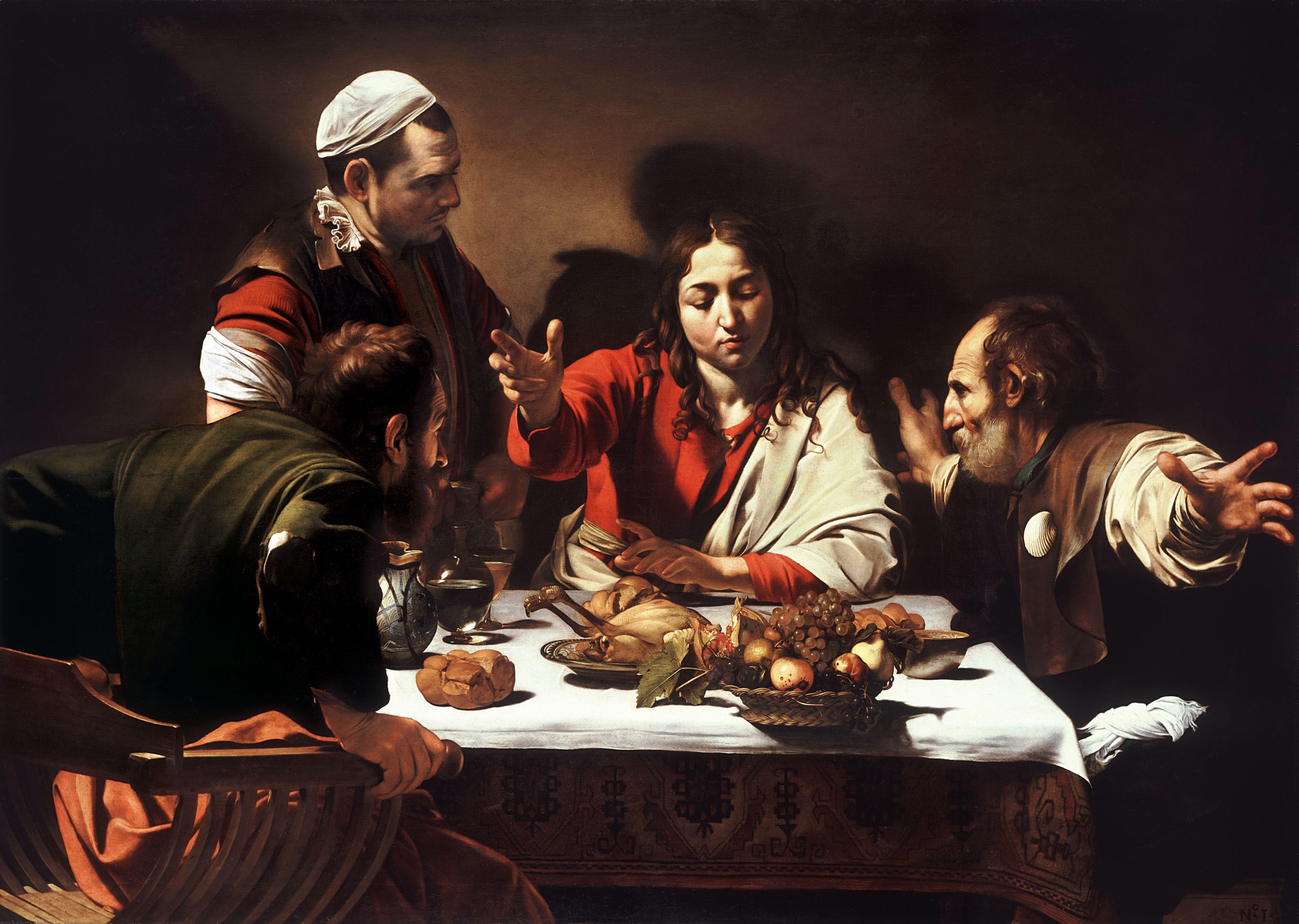
Perhaps this is why the disciples walked the road to Emmaus in Luke 24 on the first Easter. For them, life kept going. Or maybe Emmaus represented an escape from the place of devastation. They couldn’t rattle the sights and sounds of the angry mob that just brutalized and mutilated their beloved friend, Jesus. They could still see the three crosses dark against the sky, they could still hear the thumping beats of hammering nails into limbs, the buzzing of the flies, and the cry for thirst. Memories like these don’t leave a person; they linger in the mind. All the while, their life moved on; they put on their sandals and walked to Emmaus.
There’s a Hebrew proverb which says, “hope deferred makes the heart sick” (Prv. 13:12). Eugene Peterson translates this proverb in the message, ‘Unrelenting disappointment leaves you heartsick.” In Luke 24, the disciples walking to Emmaus were heartsick with an unrelenting disappointment. Not merely that they lost their beloved friend and Rabbi, but their hopes of God’s promised kingdom were dashed with an unrelenting disappointment. Jesus must have been a fraud, and we were foolish to believe him. They exclaim to the stranger walking with them, “But we had hoped that he was the one to redeem Israel.” (Lk. 24:21).
“But we had hoped…” These words emerge from the deep recesses of our hearts in a myriad of ways and situations:
but we had hoped following Jesus would make us financially secure…
but we had hoped it meant an easier marriage…
but we had hoped it meant getting married…
but we had hoped it meant obedient kids…
but we had hoped it meant having kids…
but we had hoped it meant more friendships…
but we had hoped it meant safety and health…
but we had hoped it meant no devastating surprises in life…
but we had hoped it means something more predictable, more control or clarity…
When we are faced with disappointment, we are faced with our expectations for life and our future. Our expectations are connected to the story we believe we are living in. One of the most important questions we must ask is what story are we living in?
The disciples walking to Emmaus were faithful Jews who were living the story of scripture. Not merely because this story is included in the canon of scripture, but because they were haunted by the promises of God and expecting Him to act in their lives. They grew up memorizing the Torah, reciting the psalms and hearing the stories of the Lord’s mighty acts of old. Cleopas and the other unnamed disciple believed the proclamation of John the Baptist, “prepare the way of the Lord” (Is. 40:3, quoted by John the Baptist in Mt. 3:3). In their mind, John was the next prophet in the line of Isaiah, promising the fulfillment of God’s promises to David that one would come after him from his lineage to sit on his throne and establish God’s “everlasting kingdom” (2 Sam. 7). Naturally, the death of Jesus came as a surprised devastation for these disciples. Wasn’t this one going to finally overthrow Herod and his evil alliance with Rome? Wasn’t the Lord going to restore Israel’s political honor and establish them to be “a light to the nations” (Is. 49:6)?
Recently, I had the experience of leaving a movie for a restroom break and missing an important detail; I couldn’t make sense of the story. The disciples on the road to Emmaus were despondent and perplexed, having missed a major plot twist – mainly, the resurrection. Similarly, one cannot understand the dramatic unfolding story of the New Testament without a deep immersion of the Old Testament; it’s like starting a movie halfway in. The New Testament is saturated with quotes, references, images and figures from the Old Testament. One can hardly read a chapter without some mention of David, Exodus, Abraham, floods, exile or sacrifices. Yet, for many modern Christians, reading of the New Testament is often more palatable. For many, Jesus and his teaching is compelling, but the God of the Old Testament is peculiar, at best, and morally off-putting at worst.
It was no different in the early church. During the fad of Gnosticism in the 2nd century, a man by the name of Marcion of Sinope, concluded that the God, and Father of the Lord Jesus Christ, was different than the one revealed in the Old Testament. For Marcion, the Old Testament God was a lesser malevolent creator and a tyrannical ruler, while the God of the New Testament was higher, benevolent, and gracious. He went about renouncing the validity of the Old Testament as authoritative in the life of the church and was eventually tried and pronounced heretical in the year 144 by the bishop of Rome. Nevertheless, the Marcion instincts persist within the church.
For many Christians in the Modern West, the Old Testament is just too foreign and odd. Most Bible reading plans make it through Genesis, begin to sputter in the wilderness of Exodus, and die a decisive death in Leviticus. This is amplified even more since the dawn of Modern Biblical Criticism, which analyzes the historical, literary, and linguistic methods to interpret the meaning of the text to offer the purest possible scripture. While many of these methods have been quite insightful, there is an underlying assumption baked into this interpretive tradition that is quite troubling: mainly, the assumption that Holy Scripture is an artifact and object that can be mastered on our modern Western terms.
As is often the case, these methods have been taken up in both the liberal and conservative wings of the church, whether it be on the History Channel or a Creation Museum. When the church treats scripture with this flawed assumption, we reflect America’s 3rd president, Thomas Jefferson, who famously removed sections from his Bible that did not conform with his sense of what was true. In so doing, we make God and scripture in our own image. Sadly, such practices are rampant in our cultural moment and is the source of so much spiritual abuse and harm.
St. Paul says, “All Scripture is God-breathed and is useful for teaching, rebuking, correcting and training in righteousness” (2 Tim. 3:16). While the Old Testament is peculiar, the church has always esteemed it to be authoritative and trustworthy. Ultimately, it reveals the true story of reality, the story we live in, revealing the Eternal Triune God and his creative and redemptive activity in human history.
If the Bible reveals the true story we live in, then how do we go about interpreting it?
Scripture is peculiar to us for many reasons. The grand narrative of scripture and revelation of God unfolds in foreign languages through a polyphony of voices, within a variety of historical moments, and under a plethora of written genres (e.g. poetry, narrative, proverb, etc.). It presents like a complex puzzle with stories that do not always seem to connect and, at times, appear to contradict themselves. Nevertheless, there is Christological pattern throughout the entirety of Scripture, if we but have eyes to see.
St. John, the evangelist, introduces his gospel with the cosmic view of the incarnation of Jesus, The Word made flesh: “In the beginning was the Word, and the Word was with God, and the Word was God… The Word became flesh and made his dwelling among us. We have seen his glory, the glory of the one and only Son, who came from the Father, full of grace and truth” (Jn 1:1;14).
Within this beautiful text, there is an interplay between the creation account of Genesis, wherein God made the heavens and the earth through the power of his Word. Now, St. John is saying that he has seen the Word with his own eyes – the same Word through whom the Father created all things, the same Word which spoke to Moses, and delivered Israel. In other words, the invisible God is visibly concrete to his mortal creation. He may have spoken in various times and various ways of old, but now, in the latter days, “he has spoken to us by his Son… [who is] the radiance of God’s glory and the exact representation of his being (Heb. 1:1-3). As the eternal Word made flesh, he is the fulfillment and interpretive lens of the peculiar Old Testament.
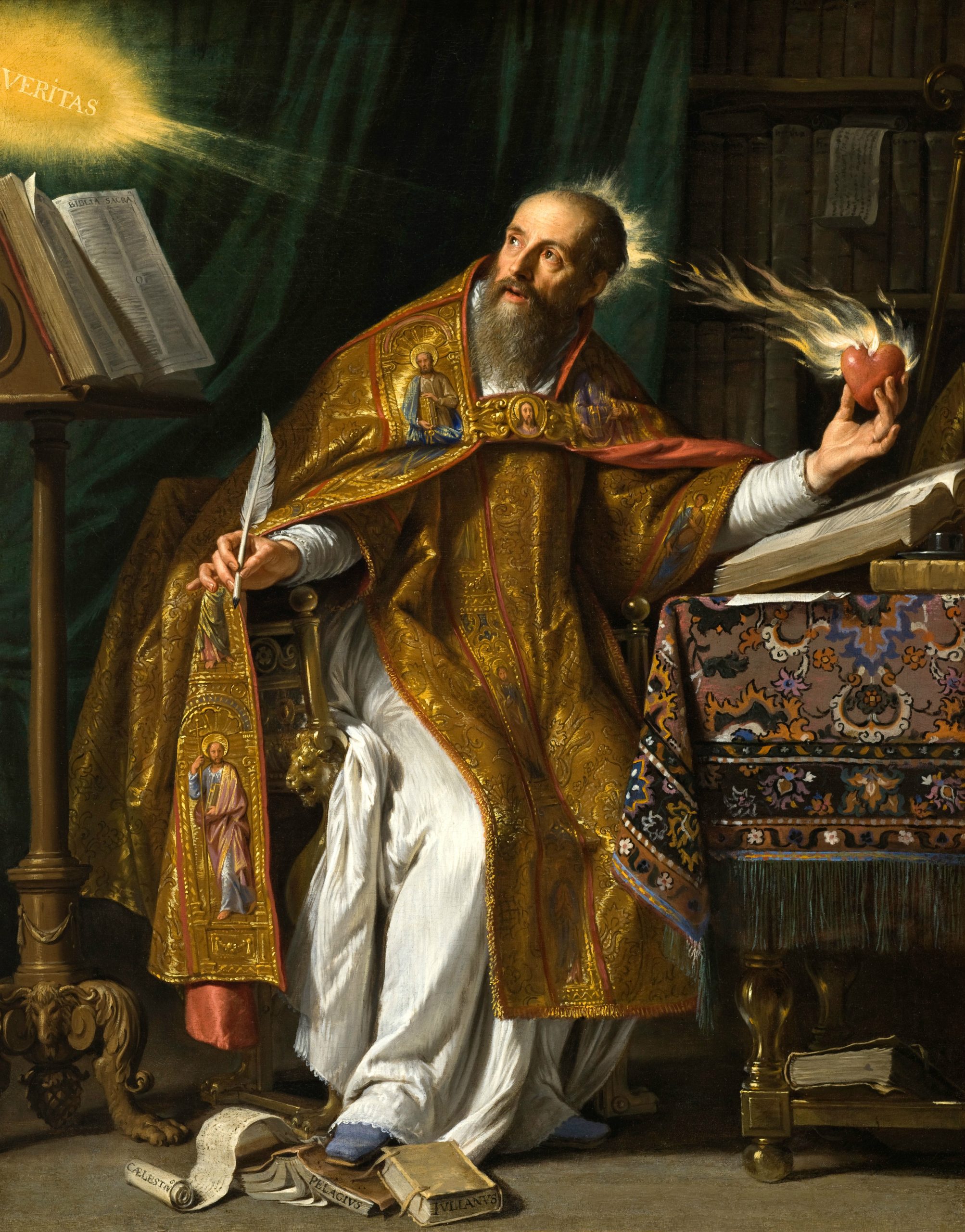
The patristic and medieval church is quite helpful here, as they had no problem seeing Jesus behind every door and above every author in the Old Testament. St. Augustine put it this way, “The New is in the Old Concealed, the Old is in the New Revealed”Note 1. His point is that the shadows of Jesus are in plain sight for those who now read backwards upon the Old Testament, having encountered the resurrected Lord. With this deep abiding confidence, the early and pre-modern church read Scriptures with a dynamic expectation to encounter God, the author and Living Word.
Unlike modern Biblical Criticism, which assumes there is a pure and single interpretation of Holy Scripture, the pre-modern interpreters believed there were layers of interpretation. There developed within the medieval church a “Fourfold sense of Scripture:”
At a basic level, there was the Literal interpretation. This is a bit misleading for moderns, as medieval Christians incorporated a complex level of scrutiny and contextual variants in their literal interpretation. Nevertheless, the literal refers to the plain meaning of the text and sought to understand events and characters as historical occurrences within their original context. Take for example the historical events of Moses and the Exodus, which tell the story of a group of Jews who escaped slavery in Egypt, crossing the Red Sea, and wandering in the wilderness. To read the book of Exodus literally, we accept that these events happened and that this was not merely a myth or parable, but an actual community.
Next is the Tropological (or moral) sense of scripture. This focuses on the ethical implications of the text, examining how it encourages righteous living and provides moral guidance for communities and individuals. In this sense the Exodus reading calls us to trust the promises of God and flee from the sin that enslaves us.
Looking deeper at the text, there is an allegorical or figural sense of scripture. This involves uncovering deeper spiritual meanings, often relating to Christ and the Church, where events and figures in the Old Testament are seen as foreshadowing those in the New Testament. This is also referred to, sometimes as typological interpretation. In this sense, the events of the Exodus foreshadow and function as a sign of a greater Exodus to come, wherein Christ frees humanity from a greater tyrant than Pharoah, mainly, sin, Satan, and death. Following this pattern, the Red Sea is a sign of Baptism, the wilderness is a sign of our current life of faith, and the manna from heaven is Holy Communion.
Finally, the anagogical sense looks towards the future and eternal realities, interpreting the text in terms of eschatology, heaven, and the ultimate destiny of humanity and the Church. In this sense, we look with hope to cross the Jordan River into a greater promised land than Canaan’s happy land, flowing with milk and honey – the New Jerusalem and tearless place.
While this fourfold sense of Scripture is no method of interpretation, nor is it formulaic in every passage, it unveils a large world of the Bible with layers of the meaning, which incorporates us into the story of God. And that’s the point. This story – the story of scripture – is not a myth with good principles to live by or some kind of textbook to master; it is a drama that enfolds us into the true story of God, directing our identity and purpose. When we “pick up and read” scripture, as St. Augustine famously did in the garden, we can trust that we will encounter the living Word, Jesus Christ, who is “the same yesterday, today and forever” (Heb. 13:8). His eternal presence pervades the entirety of Scripture and yet transcends it, such that we can never control him.
When the disciples walked with the unknown resurrected Jesus on the road to Emmaus, their unrelenting disappointment is properly framed within the Old Testament story of a promised messiah who makes all things new. What they did not expect, however, was the surprising means by which God would fulfill these promises: a suffering servant who was sacrificed for their sake and raised again. As Jesus “explained to them what was said in all the Scriptures concerning himself” (Lk. 24:27), we can imagine him drawing their attention to the many sacrificial texts in the Old Testament (Genesis 22, Ex. 12, Lev. 16, Is. 53 and many more) that point to his passion. One can imagine the scales from their eyes falling, like a detective finally solving a great mystery and seeing the evidence anew, their hearts begin to bleed with a fire-like passion.
Interestingly, this epiphany is made present to them in the breaking of bread. This thinly veiled allusion to the Eucharist emphasizes the mutual dependence of Holy Scripture and Holy Communion. It suggests that we properly interpret the story of scripture and our lives within the context of the church. This is precisely what happens at church each week – we interpret the story as active participants. Every Sunday, we hear the lessons read, preached, and then we behold the lamb: “Alleluia! Christ our Passover is sacrificed for us. Therefore, let us keep the feast. Alleluia!” Each week, when the baptized kneel at the altar, place their open hands to receive the host, they are made able to hear, see, touch, taste, and even smell the drama of God’s redeeming love for his beloved church. It is this dramatic re-enactment of the story each week that anchors us amid our own grief and disappointment.
Amid my first three months as rector of Christ Church, our parish has buried over a dozen members. While time has moved us beyond our original shock, each of us remain haunted by the horror of the Hill Country flooding and the tragic deaths of many children. We can imagine the many parents in Texas who nightly whimper their grief, “but we had hoped…” as they imagined a future with their lost child.
There is no easy explanation to the problem of evil and pain. As Christians, however, we take great comfort and draw our strength in knowing that the author of our story did not make himself immune to the horror of evil and darkness but wrote himself into our pain. More than that, his resurrection defies and overcomes the chains of sin and death, eradicating our ultimate plight. The epiphany of Luke 24 for the disciples – for us, if we have eyes to see and ears to hear – is that our past sin is forgiven, our future life beyond death is secure, and that Christ is really and truly present to and with us now. When we open the scriptures together and break bread, we are caught up in this story and made present to the risen and reigning king. My prayer for Christ Church right now is that we would open the scripture afresh in this season and encounter the risen Lord.
For further reading on the trustworthiness of Scripture or Scriptural interpretation, consider the following:
- Hans Boersma, Scripture as Real Presence: Sacramental Exegesis in the Early Church
- Richard Hayes, Reading Backward: Figural Christology and the Fourfold Gospel Witness
- Lesslie Newbigin, Proper Confidence: Faith, Doubt and Certainty in Christian Discipleship
- Ephram Radner, Time and the Word: Figural reading of Christian Scriptures
Notes
- St. Augustine, Quaest. in Hept. 2,73: PL 34, 623; cf. DV 16. Back to note 1 in the text